When to Give a Friendship Book for Kids
From the last day of school to a family move, these 7 moments are when a friendship book for kids stops feeling like a gift and starts feeling like a must.
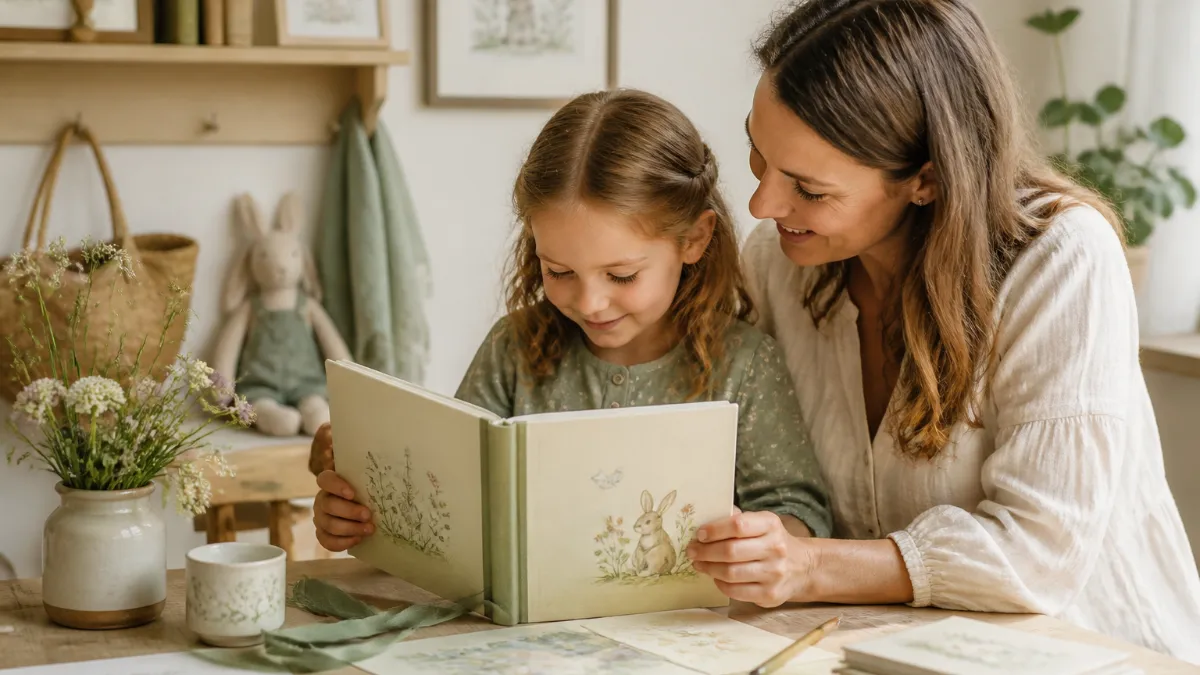
Some gifts are well-chosen. Others are perfectly timed. A friendship book for kids belongs in that rarer second category — a gift whose value depends not just on what it is, but on the moment it arrives. Give it too randomly, and it may sit on a shelf. Give it at the right moment, and it becomes the first page of something a child will carry for decades.
The question, then, isn’t really whether to give a friendship book. It’s when. The good news is that childhood is full of moments that are quietly begging for one.
1. End of the School Year
No moment in a child’s social life is more poignant (or more overlooked) than the last few weeks of a school year. The class that spent nine months together is about to scatter: to new classrooms, new teachers, summer camps in different cities, and in some cases, different schools entirely. The exact configuration of friendships that exists in May will never exist again in quite the same way.
This is the single most powerful moment to start a friendship book. The urgency is real: give it too late, and the window closes. Give it with three or four weeks of school still remaining, and a child can work their way around the classroom, collecting pages from every friend they want to remember. By the last day, they’ll have something irreplaceable — not a yearbook signed in haste, but a book of handwritten favorites, drawings, and private messages from the people who defined that particular year.
There’s something worth saying about the handwritten quality here specifically. A text message or a tagged photo disappears into a feed. A friend’s handwriting, pressed into a page with their favorite color in the margins and a little drawing of their dog, is permanent in a way that no digital record can replicate. End of year is when children feel this instinctively, even if they don’t have words for it yet.
2. Before a Family Move
When a family is relocating (whether across town or across the country) the child who is leaving often has the hardest time articulating what they’re losing. It isn’t just a house or a neighborhood. It’s a whole social world that took years to build, full of people who know their middle name and remember the time they fell off the monkey bars.
A friendship book given before a move turns something abstract and painful into something tangible and actionable. Instead of a teary goodbye that everyone immediately tries to move past, friends now have a job: fill in a page. Write their favorite memory. Draw something. Leave a message the child can read on the drive to the new city. The result isn’t just sentimental — it’s genuinely portable. The book travels with the child, carrying proof that the friendships were real and that the people in them chose to leave something lasting behind.
For parents managing a relocation, this reframe is powerful. A friendship book doesn’t ask friends to stay in touch (a promise young children rarely keep). It asks only for a page — a one-time, low-stakes act of love that creates something permanent. That permanence is exactly what a moving child needs.
3. A Birthday Between Ages 6 and 10
Birthday parties for children in this age range tend to follow a familiar script: games, cake, presents, loot bags. A friendship book breaks that script in the best possible way — because it can become the activity itself.
When a parent quietly sets a friendship book beside each place setting, or passes it around during the slower moment after cake is cut, something shifts. Guests stop being recipients of party entertainment and become contributors to something that belongs to the birthday child. Each friend fills in their page — their favorite food, their funniest memory with the birthday kid, a drawing of what they’d want for their own birthday — and by the time the party ends, the book is already half-full of the exact people who were in the room that afternoon.
This is a gift that multiplies. Every friend who writes in it makes the book more valuable, not less. And unlike a pile of presents that will be forgotten within a month, the book sits on a shelf and grows more meaningful with time. Ten years from now, the birthday child will be able to open it and remember not just what the party looked like, but what their friends were like at exactly that age — the specific handwriting, the inside jokes, the things they thought were funny when they were seven.
4. Starting a New School
Starting a new school is one of childhood’s most socially demanding experiences. Whether it’s the move to middle school, a transfer to a new district, or the beginning of kindergarten, a child entering an unfamiliar social landscape must navigate something adults often forget how difficult it is: introducing yourself to people who already have friends.
A friendship book given at the start of a new school year offers something rare — a social bridge disguised as a beautiful object. Rather than asking a child to approach a classmate with nothing but nerves, it gives them a reason: “Would you fill in a page of my friends book?” The question is low-stakes, naturally creative, and disarming in a way that a plain introduction isn’t. It invites participation rather than demanding connection.
This works because children respond to objects with purpose. A beautifully illustrated book with thoughtful prompts gives a new student something to show, explain, and share. It sparks conversation about favorite things, inside jokes, and drawings — all the small social currency that builds friendship at this age. By the time the first month of school is over, a child who might have drifted through the year in quiet isolation instead has a book with five or six new names in it, each one a connection that might deepen into something lasting.
5. National Friendship Day, Valentine’s Day, or Any “Just Because” Moment
National Friendship Day 2026 falls on Sunday, August 2 — and while most celebrations of it lean toward social media posts and friendship bracelets, it offers something more interesting for thoughtful parents and gift-givers: a named occasion that is entirely about the value of connection itself. Valentine’s Day, with its emphasis on paper, handwriting, and exchanging messages, is another natural fit. Both are calendar anchors that make a friendship book feel seasonally resonant without requiring any special life event.
But here is the thing about a friendship book: it doesn’t need one. Some of the most meaningful gifts in any child’s memory arrive on ordinary Tuesdays, without explanation or occasion. The randomness becomes part of the story — the parent or grandparent who simply said, this matters, so I’m giving it now, without waiting for a birthday or a milestone. That gesture carries its own message: that friendship is worth celebrating even when nothing is happening, which is perhaps the most important thing a child can learn.
A “just because” friendship book also arrives without the competition of other gifts. It lands in the quiet of an average afternoon, gets opened slowly, and gets thought about rather than immediately tossed aside in the excitement of a party. Sometimes the unannounced gift is the one that sticks.
6. After a Summer Apart
Summer has a strange effect on childhood friendships. Long breaks from school mean that children who were inseparable in June may feel slightly shy with each other again come September — particularly if they spent the summer in different places or different social circles. The intimacy of the school year doesn’t automatically carry over.
A friendship book given at the start of autumn (right after summer ends) is a way of re-anchoring a child in their friendships before that subtle shyness calcifies into distance. It gives them a reason to reach out: “I got this book over the summer. Can you fill in a page?” The act of asking is itself a small act of social courage, and the response (a friend saying yes, sitting down, and writing something) is a reminder that the friendship survived the gap.
It also begins building a record across time. A child who starts a friendship book in third grade and adds to it every September has something extraordinary by fifth grade: a layered portrait of the same friendships evolving year by year, the same people growing up on the page.
Summer has a strange effect on childhood friendships. Long breaks from school mean that children who were inseparable in June may feel slightly shy with each other again come September — particularly if they spent the summer in different places or different social circles. The intimacy of the school year doesn’t automatically carry over. Think of it like a fire that’s been left untended: the embers are still there, but they need a little oxygen to catch again. A friendship book given at the start of autumn (right after summer ends) is a way of re-anchoring a child in their friendships before that subtle shyness calcifies into distance. It gives them a reason to reach out: “I got this book over the summer. Can you fill in a page?” The act of asking is itself a small act of social courage, and the response (a friend saying yes, sitting down, and writing something) is a reminder that the friendship survived the gap. It also begins building a record across time. A child who starts a friendship book in third grade and adds to it every September has something extraordinary by fifth grade: a layered portrait of the same friendships evolving year by year, the same people growing up on the page.
7. When Nothing Special Is Happening at All
There is an argument — and it’s a serious one — that the very best time to give a friendship book is when there is no reason to give it at all. No move, no birthday, no new school. Just a child going about their ordinary life, surrounded by friends who matter.
Children have a remarkable ability to recognize when they are seen. A gift that arrives without occasion tells them something that no party favor or holiday present can: that someone in their life thought about their friendships specifically, chose a beautiful thing to honor them, and gave it on a random Thursday because it felt right. That is a different kind of love from birthday love, and children feel the difference.
This is also the gift that parents and grandparents who live at a distance are best positioned to give. A grandmother who mails a friendship book from across the country, without any occasion, is saying something that a birthday card cannot. She is saying: I know your friendships matter. I want you to have a place to keep them. That message, delivered through a beautiful illustrated book with pages waiting to be filled, is one a child does not forget.
The Right Moment Is the One That Feels Urgent to You
Looking at these seven moments together, a pattern emerges. The occasions that make a friendship book land with the most meaning share one quality: they are moments when a child’s social world is either changing, beginning, or quietly at its fullest — and when an adult in their life is paying close enough attention to notice.
You don’t need all seven. You need one. The end-of-year moment happening right now, or the new school starting next month, or the move that’s been planned for this fall. Whichever moment resonates is the right one to act on — and the window for any of them is shorter than it feels.
Album Amicorum’s My Friends Book is designed to be ready for exactly these moments: beautifully illustrated, filled with thoughtful prompts that children genuinely want to answer, and built to become the kind of keepsake that outlasts the occasion that started it. Whether you’re giving it at a birthday party where friends can fill it in on the spot, or tucking it into a moving box so a child has something real to carry into their next chapter, the book is already doing what it was made to do — making the friendships of this exact moment permanent. If one of these seven moments is on the horizon, the time to find the book is before it passes.
Where Things Stand
Gifting in 2026 continues to lean toward fewer, better, more personal gifts, alongside a broader shift to a slower, analog childhood. Handmade and personalized gifts remain among the most popular choices, which suits a book that friends fill in by hand.
See Related below for more on this topic.
For further reading, see the Sources listed below.
Frequently asked questions
What is the single best time of year to start a friendship book for a child?
The end of the school year is widely considered the ideal moment — class rosters are about to change, and the friendships of this specific year are fresh and emotionally present. Giving the book in the final weeks of school means friends can fill it in before summer scatters everyone, making it a true snapshot of that year.
Can a friendship book work as a birthday party activity?
Yes — and it's one of the cleverest uses of the book. When a friendship book is given at a birthday party for a child between ages 6 and 10, guests can fill in their own page as part of the celebration. By the time the cake is cut, the book already holds a room full of handwritten messages, drawings, and favorite-things lists that no party favor bag could replicate.
How does a friendship book help a child who is starting at a new school?
A friendship book gives a new student a gentle, low-pressure reason to approach classmates and ask them to participate in something. Rather than navigating the awkwardness of introducing themselves cold, a child can ask a new friend to fill in a page — turning a social hurdle into a shared creative act. It works as a social bridge disguised as a beautiful object.
Does giving a friendship book have to be tied to a specific occasion?
Not at all. Some of the most treasured friendship books are started on completely ordinary days — a random Tuesday in October, or a quiet afternoon after school. The lack of occasion can actually add to the meaning: it tells a child that their friendships are worth celebrating even when nothing special is happening, which turns the gift itself into the event.
Related
About the author

VP Content
Dori Fussmann leads Album Amicorum, an independent studio behind an illustrated Friend Book that children fill in by hand — turning the notes, drawings, and small messages of childhood friendships into a keepsake worth keeping. His background is in building consumer brands, and he started writing here out of a conviction that the memories that matter most belong off-screen. These articles draw on child-development research and the work of experts such as Jonathan Haidt.