Why Childhood Friendship Matters
Research confirms childhood friendships are vital for wellbeing. Here's how to nurture, protect, and preserve your child's most meaningful connections.

Friendship Is Not a Luxury — It Is a Developmental Necessity
There is a quiet assumption in modern parenting culture that friendship is one of those things that just happens — something children sort out on their own while the real developmental work happens in classrooms, sports clinics, and enrichment programmes. That assumption is wrong, and the research has been saying so for decades. Childhood friendships fundamentally shape emotional development, social skills, and long-term mental health outcomes, with research showing that individuals who maintained early close friendships experience lower rates of adult mental health challenges and greater psychological resilience throughout life. These are not soft benefits. They are measurable, longitudinal outcomes that track children from their early school years into adulthood.
Childhood friendships shape crucial developmental outcomes through distinct stages from preschool through adolescence, with research showing that early positive peer relationships contribute to improved behavioural adjustment, stronger social skills, and lower rates of mental health challenges in adulthood. That body of evidence spans multiple long-term studies conducted across different countries and cultures, and its central finding is remarkably consistent: the quality of a child’s friendships belongs in the same conversation as nutrition, sleep, and education when we are talking about what children need to thrive.
Friendship is a consequential relationship for child development and well-being, and long-term longitudinal studies document the diverse and multifaceted impacts of childhood friendship competencies on later adjustment. For parents who are weighing up after-school activities, educational philosophies, and gift choices, that finding carries a direct implication: the time and space you protect for your child’s friendships is not time taken away from their development. It is development, in one of its most irreplaceable forms.
The 5–12 Window: When Friendship Changes Everything
Understanding when the most important friendship formation happens is the first step toward protecting it. Young children may begin forming social connections as early as two or three years old, but developmental research indicates that children typically do not establish genuine friendships until around four or five years of age. Authentic friendships involve reciprocal trust, emotional understanding, mutual consideration, and the capacity to think about another person’s feelings — cognitive abilities that emerge gradually during early childhood. Before this developmental milestone, children’s “friendships” often consist primarily of parallel play relationships with classmates or neighbours.
What changes at around five — and continues deepening through the primary school years — is the shift from play-based acquaintance to something far more profound. Children move from playing alongside each other to caring about each other. They begin to notice when a friend is upset. They feel the pull of loyalty. They start to build a shared language of in-jokes, rituals, and secrets that belongs only to them. This is the social and emotional bedrock being laid for adulthood.
School-aged children who kept the same best friend showed higher educational attainment and fewer conduct problems than children who did not. Research among kindergarteners has also demonstrated that those who maintained their friendships liked school better as the year progressed. This connection between friendship stability and school engagement may seem surprising, but it reflects something parents already sense intuitively: a child who feels securely connected to even one person in their environment can approach the world with a confidence that a friendless child simply cannot.
Friendships are not just about having someone to play with. They are also where children begin practising how to communicate, handle disagreements, and regulate their emotions. Every argument navigated, every forgiveness extended, every secret kept — these are the small, daily exercises that build the social and emotional muscles children will rely on for the rest of their lives.
Depth Over Breadth: The Remarkable Power of One True Friend
One of the most reassuring findings in the friendship research for parents is also one of the least-known. You do not need to worry that your quiet, selective child is falling behind because they have just one close friend rather than a wide social circle. Having a single friend may be more important for protecting against emotional problems than how many friends a child has.
This distinction — between friendship quality and social popularity — is critical. One study found that dyadic friendship experiences in adolescence, relative to feelings of popularity, were more influential in predicting adolescent loneliness and depression. Popularity, it turns out, is not a substitute for genuine connection. A child who is liked by many but deeply known by none is at greater emotional risk than a child with one trusted friend who truly sees them.
As one researcher put it, “in the face of life’s challenges, having a close friend to turn to seems to be a buffer or protective factor against some of the negative outcomes we might otherwise see.” This buffering effect has been documented across a range of adversities — social exclusion, bullying, family disruption, academic pressure. The establishment of close friendships is an important milestone in development, and high-quality friendship is an essential force in promoting children’s mental health development, improving subjective well-being and reducing loneliness.
For parents, this reframes the goal entirely. Rather than engineering a child’s popularity or filling their calendar with social obligations, the far more powerful investment is in nurturing the conditions for one deep, reciprocal, trusting friendship to grow and be sustained over time.
The Quiet Threats: Screens, Over-Scheduling, and the Erosion of Connection
Knowing that childhood friendship matters this much makes the trends of the past decade particularly sobering. Research shows that today’s children and teenagers are lonelier than ever, and that social media, lingering effects from school closures, and a reliance on virtual interactions have made it harder to connect with others in a meaningful way.
This is not simply a technology story. It is a time story. Genuine childhood friendship requires something that modern life is extraordinarily good at consuming: unhurried, unstructured, face-to-face time. Young people are struggling to keep up true friendships, partly because so many children confuse the number of online followers they have with close relationships. All the time children spend on screens is time they are not learning how to interact with peers face-to-face.
The over-scheduling crisis compounds the screen problem. Increasingly busy lifestyles make it hard to carve out playtime for children. While trying to boost academic performance, schools may limit or eliminate recess. Parents juggle work and the demands of home and family. Children are often involved in structured sports, classes, and activities that leave little free time for open-ended play. When every hour of a child’s afternoon is assigned to an organised activity with a coach, a curriculum, and a measurable outcome, friendship is quietly crowded out — not through neglect, but through an excess of good intentions.
That statistic deserves to be read slowly. One in five. It is not a fringe concern; it is a pattern — and the conditions that produce it are not mysterious. They are the predictable result of childhoods restructured around productivity, screens, and adult supervision, with the unstructured, free-roaming, face-to-face time that genuine friendship needs squeezed to the margins.
Slow, Analog Play: The Evidence-Based Foundation of Friendship
Here is what the research is unambiguous about: the conditions that friendship needs to grow are the same conditions that screen culture and over-scheduled childhoods systematically remove. A wealth of research shows that unstructured play — play that is not organised or directed by adults and that generally does not have a defined purpose or outcome — is a fundamental necessity for children to thrive physically, emotionally, mentally, and socially.
As one project from the Harvard Graduate School of Education noted, play allows children to “make sense of their world; the way they form and explore friendships; the way they shape and test hypotheses about their intellectual, social, emotional, and physical environments.” These are not incidental benefits. They are the precise capacities that make deep friendship possible: the ability to understand another person’s inner world, to negotiate, to imagine, to repair.
Play has significant cognitive, emotional, and social benefits for elementary school children. Periods of play help students to focus, build friendships, improve mood, work cooperatively, and work through conflict without adult intervention. That last phrase matters enormously. When children work through conflict without adult intervention, they are developing the conflict-resolution skills that will sustain their friendships across years and transitions. When adults step in too quickly — mediating every disagreement, preventing every moment of boredom — they inadvertently short-circuit this developmental process.
When engaging in unstructured play, children often interact with their peers, and this social interaction enables them to develop critical social skills such as sharing, taking turns, negotiating, and resolving conflicts. Add to these skills the emotional vocabulary that comes from imaginative play — the ability to name what they feel, to express it, to understand it in others — and you have the full social-emotional toolkit that genuine childhood friendship requires.
This is why the growing movement toward analog, screen-free, unhurried childhood is not nostalgic sentiment. Going analog is emerging as a major parenting trend. From board games and puzzles to traditional craft activities, families are embracing analog tools to create boundaries, reduce overstimulation, and support healthier childhood development. Parents who are choosing boredom and backyard play over structured enrichment are not behind the times — they are ahead of the evidence.
How Parents Can Actively Nurture Childhood Friendship
Protecting friendship is an active choice, not a passive hope. The good news is that the most effective strategies are also the simplest — and they cost nothing.
Create Unhurried, One-on-One Time
The one-on-one playdate is the single most friendship-fertile environment available to primary school children. Group activities are wonderful, but they diffuse attention and rarely allow the sustained, uninterrupted contact that moves a relationship from friendly acquaintance to genuine closeness. One friend. Unstructured time. Minimal adult direction. That is the formula.
Although it might be tempting to think children are safer at home, they are almost certainly better off getting together with friends face-to-face. This means resisting the cultural anxiety that keeps children indoors, supervised, and screen-adjacent, and instead creating regular opportunities for children to be physically present with each other — in your garden, in a park, in a kitchen making something together.
Let Boredom Do Its Work
Boredom is not a parenting failure. It is the creative space in which children invent games, forge alliances, tell stories, and discover what they have in common. When a child says “I’m bored” and a parent’s reflex is to hand them a device or drive them to an activity, an opportunity is lost. The resistance to boredom is, in a very real sense, a resistance to the conditions that grow friendship.
Model Friendship in Your Own Life
Children learn what friendship looks like by watching the adults around them. Parents who visibly invest in their own friendships — who make time for a close friend, who speak warmly about people they love, who write letters and remember birthdays — give their children a lived model of what deep connection looks like and why it is worth the effort. Interactive play and relationships with family members teaches empathy, reciprocity, sharing, problem-solving, and perspective-taking, fostering feelings of connection and acceptance. The relational habits formed at home become the templates children carry into their friendships.
Trust the Process — and Stay Curious
When your child comes home upset after a falling-out with a friend, the instinct to fix it is understandable and loving. But children who are given space to navigate social difficulties — with a parent who listens without taking over — build something more durable than a resolved conflict: they build social competence. Ask questions rather than offering solutions. Be curious about their friendships without interrogating them. Show that you take their social world seriously without colonising it.
The Science of Handwriting and Why It Makes a Message Irreplaceable
There is one dimension of childhood friendship that deserves its own discussion, because it touches on both the neuroscience of memory and the profound human need to feel seen: the act of writing something by hand to someone you care about.
Handwriting, compared to typing, results in more complex brain connectivity patterns that enhance learning and memory. Handwriting, whether in cursive or on traditional pen and paper, activates extensive brain regions vital for memory and learning. When a child picks up a pencil and writes their best friend’s name, their favourite colour, what they love most about that person, and a message that only the two of them will fully understand, they are doing something neurologically distinct from anything a keyboard or touchscreen can replicate.
Handwriting is deeply personal. Unlike typing, which often feels detached and impersonal, writing by hand fosters a stronger emotional connection to your thoughts. Whether jotting down memories, brainstorming ideas, or penning a heartfelt letter, the deliberate pace of handwriting encourages introspection and mindfulness. A typed message can be deleted, edited, auto-corrected into anonymity. A handwritten note — with its individual letter forms, its pressure on the page, its crossings-out and decorated margins — is a fingerprint. It is irreplaceable in a way that no digital artefact can be.
The power of handwriting comes from the way it engages multiple senses at once. Unlike typing, which relies on a single, repetitive motion, handwriting activates multiple areas of the brain by combining visual, auditory, and kinesthetic input. This multisensory engagement is precisely what makes a handwritten message from a childhood friend so emotionally potent — not just to receive, but to read again decades later. The handwriting itself holds the child, at the exact age they were, in a way that a typed message never could.
Preserving Friendship as an Act of Love
Childhood is brief in a way that only becomes fully apparent in hindsight. The friendships that feel permanent — the best friend who walks home from school every day, the child who knows all your child’s secrets, the pair who have their own language and their own games — are, in fact, terrifyingly fragile. Families move. Schools change. Life intervenes. Some childhood friendships conclude as people’s lives diverge. Friends may develop different interests, experience personal growth in different directions, or relocate to new communities.
This is not a reason for sadness; it is a reason for intentionality. The most profound gift a parent, grandparent, or thoughtful gift-giver can offer a child is not another toy or another subscription — it is a way of saying: this friendship matters, and it is worth honouring. Physical, handwritten keepsakes do something that photographs and digital archives cannot: they make a friendship tangible. They give it weight, texture, and permanence. They transform a moment of connection into an object that can be held, revisited, and treasured for a lifetime.
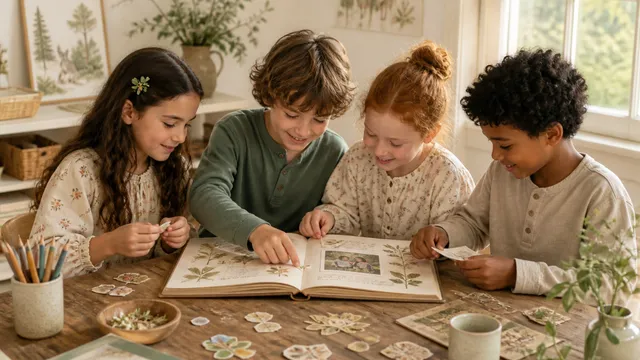
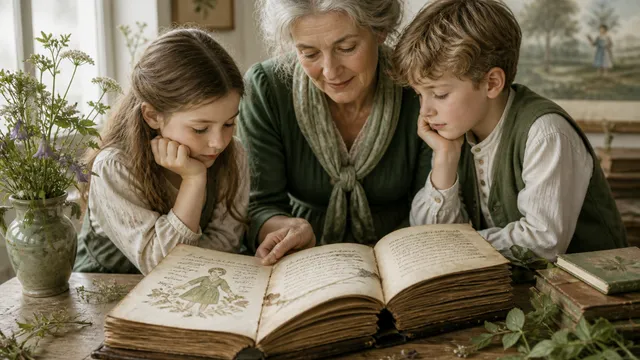
In a friendship book, two or more people vow each other their friendship through filling out a page in the other person’s album. This usually takes place during special occasions, like festivities or on departure from a place of study. The friendship book creates the opportunity to have a lifelong memory of the book owner’s childhood friends. This tradition — simple, tactile, deeply human — has endured because it works. It captures something true about what friendship is: a promise made in a moment, preserved so it can be kept across time. The Album Amicorum was part of a larger trend to record family, friends, and acquaintances that began in the 16th century.
As a token of their friendship, participants would fill the pages of each other’s albums with poems, citations, sketches, or paper cuts, and sign them. What began among European scholars and students — a beautiful, serious practice of honoring the people who shaped you — finds its most natural expression today in the hands of primary school children who have their own stories to tell, their own drawings to share, and their own words to write.
This is precisely what Album Amicorum’s beautifully illustrated Friend Books are designed to hold. Each book invites a child’s friends to fill their own page: their handwriting, their drawings, their favourite things, their message — a one-of-a-kind record that captures each friendship exactly as it was, at exactly the age it was. Not a photograph of a moment, but the moment itself, in the child’s own hand. As the years pass and friendships shift and children grow into the adults they were always becoming, a Friend Book grows more precious with every page — a living document of a childhood that cannot be recreated, and a friendship that deserved to be remembered.
Choosing a gift or keepsake that slows things down, that invites real interaction, and that leaves something physical and lasting in a child’s hands is one of the most meaningful things an intentional adult can do. Not because childhood friendship needs commemorating after the fact, but because the act of preserving it — the decision to open a book and ask a friend to write their name inside — is itself an act of connection, happening in real time, in real handwriting, between two people who matter to each other.
Where Things Stand
As the 2026–27 school year began, childhood friendship drew fresh attention from researchers and school psychologists, who stress that early friendships are where children practice communicating, handling disagreements and regulating emotions. At the same time, the analog-childhood movement keeps growing, with more families treating unstructured, in-person time as a developmental need rather than a luxury.
For further reading, see the Sources listed below.
Frequently asked questions
At what age do children form real, meaningful friendships?
Developmental research suggests that while children may begin forming social connections as early as two or three, genuine reciprocal friendships — built on mutual trust, shared feelings, and emotional understanding — typically emerge around ages four to five. The primary school years (ages 5–12) are considered the most critical window for developing the kind of close, loyal bonds that significantly shape emotional development and long-term wellbeing.
Does my child really need lots of friends, or is one close friend enough?
Research consistently shows that having even one close, reciprocal friendship is far more important for a child's emotional health than being widely popular. Studies indicate that a single high-quality friendship can act as a meaningful buffer against loneliness, anxiety, and depression. What matters most is the depth and quality of the connection — trust, loyalty, and genuine mutual care — not the number of friends a child has.
How can I help my child build deeper friendships without over-managing their social life?
The most effective thing parents can do is create the conditions friendship needs — unhurried, unstructured time for face-to-face play, ideally one-on-one. Resist the urge to over-schedule or to resolve every social conflict for your child; working through disagreements is itself a vital part of friendship development. Modelling your own genuine friendships, encouraging your child to listen actively and show interest in others, and keeping playdates low-key and screen-free will do more for their social life than any structured activity.
Why does preserving childhood friendship memories matter, and what's the best way to do it?
Childhood is brief, and friendships shift quickly — the best friend at age seven may live across the country by age twelve. Physical, handwritten keepsakes create a permanent, irreplaceable record of those bonds: real handwriting, personal drawings, and specific memories that no photograph or digital file can fully capture. A Friend Book (or Album Amicorum), in which each friend fills in their own page, creates a living document of a friendship that can be revisited and treasured for a lifetime.
Related
Sources
About the author

VP Content
Dori Fussmann leads Album Amicorum, an independent studio behind an illustrated Friend Book that children fill in by hand — turning the notes, drawings, and small messages of childhood friendships into a keepsake worth keeping. His background is in building consumer brands, and he started writing here out of a conviction that the memories that matter most belong off-screen. These articles draw on child-development research and the work of experts such as Jonathan Haidt.