Slow Childhood & Analog Play
What slow childhood and analog play really mean, why the science supports them, and how any family can embrace unhurried, screen-free living today.
What Slow Childhood and Analog Play Actually Mean
There is a growing feeling among many parents that childhood is moving too fast — that between packed schedules, glowing screens, and the constant hum of notifications, something essential is slipping away. Slow childhood and analog play are two philosophies that name that feeling and offer a coherent response to it. Understanding what each term actually means — and how they work together — is the starting point for everything that follows. For many families, the biggest decision here is when to give a phone; see what a smartphone-free childhood means.
Slow childhood is a broad orientation toward how a child’s early years are experienced. It is a parenting approach in which fewer activities are organized for children, and they are instead allowed to explore the world at their own pace — a response to the widespread trend for parents to schedule activities and classes, to solve problems on behalf of children, and to buy services from commercial suppliers rather than letting nature take its course. At its heart, slow childhood is a claim about time: that children need long, unscheduled stretches of it, and that the modern impulse to optimize and accelerate childhood actually undermines healthy development rather than supporting it.
Analog play is the daily practice that makes slow childhood concrete. It refers to child-led, hands-on play using physical materials — paint, clay, blocks, cards, paper, outdoor spaces — rather than digital devices. For most families, going analog isn’t about rejecting technology or chasing nostalgia; it’s about supporting a play-based, developmentally healthy childhood while screens and AI become more influential. The two philosophies are deeply intertwined: analog play is what slow childhood looks like in practice, and slow childhood is the philosophical container that gives analog play its purpose.
Together they share a single core conviction: that children thrive when given unhurried time, open-ended materials, and real-world experiences free from digital overstimulation. That conviction is not merely sentimental — it is backed by decades of developmental research.
The Developmental Case: What the Science Actually Shows
One of the most important things thoughtful parents can do is separate the science from the nostalgia. Embracing slow childhood and analog play is not a retreat into the past — it is a forward-looking choice grounded in robust child development research.
Research demonstrates that developmentally appropriate play with parents and peers is a singular opportunity to promote the social-emotional, cognitive, language, and self-regulation skills that build executive function and a prosocial brain. This is a central finding of the American Academy of Pediatrics’ clinical report, “The Power of Play,” which was formally reaffirmed in January 2025 — meaning the evidence base behind it has been reviewed and found current. Play is not frivolous: it enhances brain structure and function and promotes executive function — the process of learning, rather than the content — which allows us to pursue goals and ignore distractions.
The executive function connection is particularly significant. Fantasy play, dress-up, and fort building join the emotional and social repertoire of older children, just as playground activities develop motor skills; in play, children are also solving problems and learning to focus attention, all of which promote the growth of executive functioning skills. Research comparing traditional and digital play reinforces this point: among preschoolers who attended multiple play sessions, the results showed a sustainable positive effect on executive function development for role play and play with rules, while digital play showed a lasting result only for a single domain.
The links between play, language, and cognition run deep. A young child’s ability to regulate behavior — a component of executive functioning, the cognitive processes that help with planning, focus, and self-control — is related to how they process and acquire language.
Research suggests “a virtuous spiral during a child’s development in which executive function can help develop more language skills, which can in turn help develop executive function, and so on.” When children engage in open-ended, imaginative, analog play, they are not simply passing time — they are building the cognitive infrastructure that will serve them for the rest of their lives.
The child development research backing this up is substantial: extended screen time has been linked to shorter attention spans, difficulty with emotional regulation, and reduced capacity for imaginative play in multiple studies. Choosing analog play is therefore not a lifestyle aesthetic — it is a science-backed developmental investment.
A Rich Philosophical Lineage
One of the gifts slow childhood and analog play offer parents is a sense of belonging to something larger than a personal preference. These philosophies are validated by several robust pedagogical traditions, each of which independently arrived at similar conclusions about what children need.
Waldorf education, developed by Rudolf Steiner in the early twentieth century, is perhaps the most protective of childhood’s natural pace. Academic learning is deliberately delayed until age seven in order to keep children in a state of natural childhood as long as possible; before that age, the focus is on play and discovery, with a strong emphasis on art, imagination, and creativity. Plastic toys and screen time are discouraged, with a large emphasis placed on fostering imagination and creativity through hands-on activities like gardening, sewing, and woodworking.
Montessori education approaches the same territory from a different angle. The Montessori approach is child-centered, valuing hands-on, self-directed learning and collaborative play, with classrooms designed to foster independence and teachers acting as guides rather than instructors — the goal being to develop the whole child socially, emotionally, physically, and intellectually. In the Montessori framework, play is not separate from learning: it is learning.
Forest Schools offer yet another expression of the same values. Forest Schools believe in immersing children in nature for as long and as often as possible; being outside helps them with self-regulation and empowers them to take both physical and emotional risks, with emphasis on growing relationships, making choices, and practicing independence in a natural setting.
The pace of learning is as fast or as slow as a particular group of children needs it to be, with no strict timetables and no formal assessments; children are encouraged to learn at their own pace and explore what they love.
Finally, the Slow Parenting movement draws these threads together into an explicit philosophy. Stemming from the broader Slow Movement, it makes recommendations across play, toys, access to nature, and scheduled activities. What unites all of these traditions is not doctrine but direction: they all point toward giving children more time, more autonomy, and more contact with the physical, natural world.
Parents who are drawn to slow childhood and analog play are not adopting a fringe position — they are joining a conversation that spans centuries of educational thought and has been validated repeatedly by modern developmental science.
Practical Entry Points: No Overhaul Required
One of the most common misunderstandings about slow childhood and analog play is that they require a total lifestyle transformation — a ban on all screens, a move to the countryside, a pedagogical certification. They do not. This isn’t about rejecting technology or chasing nostalgia; it’s about supporting a play-based, developmentally healthy childhood while screens and AI become more influential. The most sustainable changes are incremental and family-specific. A good first step is the toy shelf (see our guide to analog toys for kids), and if screens are going, plan what children can do instead of a smartphone. Here are the most accessible entry points:
Screen-free zones and times. Designating certain rooms or hours as screen-free creates structure without confrontation. Parents are setting a few tech-free family rhythms — deciding where phones go when they walk in the door, making the first few minutes after school phone-free, and building in analog rituals like board games on weekends, walks, and cooking together. These small boundaries, held consistently, have an outsized effect on the texture of family life.
Boredom windows. Counterintuitively, one of the most powerful things a parent can offer is nothing. Analog living creates space for imagination to flourish; some parents are recognizing that their children need to be bored, because boredom is where creativity sparks, problem-solving develops, and kids learn to entertain themselves. A daily “analog hour” — screens off, activity unchosen — is a simple, low-cost practice any family can begin tomorrow.
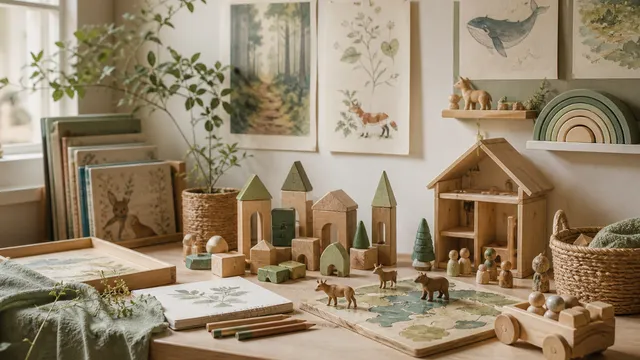
Open-ended toy shelves. The materials available to a child shape the play that is possible. Traditional low-tech toy categories including building sets, games and puzzles, and exploratory toys are driving growth in the toy market; these categories give children space to play at their own pace, encourage imaginative play, and engage senses organically. Rotating a small selection of open-ended materials — blocks, art supplies, natural objects — keeps the environment stimulating without overstimulating.
Analog rituals. Board games, nature walks, cooking together, reading aloud, tending a small garden — these are not enrichment activities in a scheduled sense. They are rhythms that anchor family life in the physical world. Their repetition is a feature, not a bug: predictable rituals build the sense of safety and belonging that allows children to take creative risks in their play.
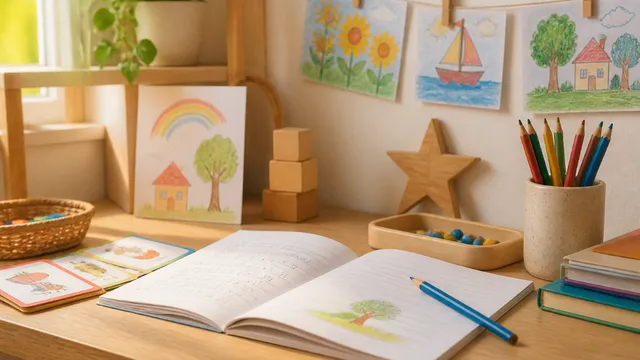
Handwritten correspondence. One of the most underrated analog practices for children is writing and receiving letters. The handwritten notes trend is a meaningful response to digital fatigue, offering a tangible, personal connection that emails and instant messages cannot replicate; in 2026, people are choosing handwritten communication to express sincerity, celebrate milestones, and create lasting keepsakes that cut through the noise of an increasingly automated and AI-driven digital world. For children, the practice of writing a letter — choosing the words, forming each letter by hand, addressing and sending it — is a lesson in attention, patience, and care that no text message can teach.
The Fullest Expression: Making Things That Last
All of the practices above share something in common: they happen in time. A boredom window ends. A board game is put away. A nature walk concludes. But the fullest expression of slow childhood and analog play is not just what children do in the moment — it is what they keep.
Physical, handmade, handwritten objects carry the texture of childhood in a way that digital files simply cannot. A childhood object that captures a specific request or moment can prove that a friendship still matters decades later; pen pals and their correspondence preserve memory in a tangible form and make room for relationships that do not depend on speed. This is why intentional keepsake-creation — making things by hand that are meant to be kept — is not a separate hobby but the natural culmination of an analog approach to childhood.
The tradition of the friendship book, or Album Amicorum, captures this idea in its most beautiful form. For centuries, people carried an Album Amicorum — otherwise known as a friendship book — in which memories of dear ones and special moments were collected, taking it with them on their travels.
In a friendship book, two or more people vowed each other their friendship through filling out a page in the other person’s album; this usually took place during special occasions, and the entry could be renewed during reunions — giving the friendship book the opportunity to hold a lifelong memory of childhood friends. The earliest friendship books, first used by students from Northern Europe in the early sixteenth century, were prepared entirely by hand; a small illustration would be commissioned from a local artist and inserted into the book alongside a friend’s signature and a passage of text.
What these historical objects understood — and what modern parents are rediscovering — is that the act of filling in a book together, by hand, is itself a slow, analog, relational practice. It is the opposite of a screenshot. It requires presence, intention, and time. And it produces something that cannot be deleted, auto-archived, or replaced: a one-of-a-kind record of who these children were to each other, at this exact moment in childhood, written in their own handwriting, decorated with their own drawings.
That is what makes the Album Amicorum Friend Book by Album Amicorum such a natural fit for families already living by slow childhood values. Beautifully illustrated and thoughtfully designed for children ages 5–12, it invites each friend to fill in their own pages — sharing favorite things, handwritten messages, drawings, and memories — creating a collection of friendship that can never be recreated. It is not a product layered onto a slow childhood philosophy; it is an expression of it: a tangible artifact of childhood, filled together by hand, and treasured for a lifetime. If you have already begun the work of slowing down — creating boredom windows, setting up an analog toy shelf, protecting time for real-world play — adding a Friend Book to your child’s life is the most natural next step.
Where Things Stand
The analog childhood movement has moved beyond niche parenting circles in 2026. Families are embracing board games, puzzles and hands-on making to reduce overstimulation, school phone restrictions have spread, and many commentators now treat ‘going analog’ as a lasting shift rather than a short-term fad.
Frequently asked questions
What is the difference between slow childhood and analog play?
Slow childhood is a broad philosophy about how a child's entire upbringing is paced — prioritizing unhurried time, deep play, real-world experience, and meaningful relationships over busyness and digital stimulation. Analog play is one of its most important practices: child-led, hands-on activity using physical materials rather than screens. Think of slow childhood as the vision and analog play as the daily habit that makes it real.
How do I start embracing analog play without overhauling our whole family routine?
Start with one small ritual: a daily 'analog hour' where screens go off and kids choose their own activity. Keep a rotating basket of open-ended materials — crayons, blocks, craft supplies, a deck of cards — within easy reach. Introduce boredom deliberately by resisting the urge to fill every gap. These micro-shifts compound quickly; most families notice a change in their children's imaginative capacity within a few weeks.
Is there a pedagogical tradition that supports slow childhood and analog play?
Yes — several. Waldorf education delays academic instruction in favor of imaginative play and artistic work through age seven. Montessori treats play as children's work, with child-led, hands-on learning at its core. Forest Schools immerse children in outdoor, unstructured nature play. The Slow Parenting movement pulls all of these threads together, advocating for fewer scheduled activities and more child-directed time. Each tradition independently arrived at the same core insight: children flourish when given time, space, and open-ended materials.
Can handwritten keepsakes like friend books really be part of a slow childhood practice?
Absolutely. Writing or drawing by hand is a deeply analog act — it slows communication down to human speed, requires full attention, and produces something physical and irreplaceable. When children fill a friend book together, they practice listening, self-expression, and thoughtful reflection. The resulting object becomes a one-of-a-kind record of childhood that a screenshot or group chat thread simply cannot replicate, making it one of the most natural extensions of an analog childhood philosophy.
Related
About the author

VP Content
Dori Fussmann leads Album Amicorum, an independent studio behind an illustrated Friend Book that children fill in by hand — turning the notes, drawings, and small messages of childhood friendships into a keepsake worth keeping. His background is in building consumer brands, and he started writing here out of a conviction that the memories that matter most belong off-screen. These articles draw on child-development research and the work of experts such as Jonathan Haidt.