Meaningful, Screen-Free Gifts for Kids
Discover gift categories that are truly screen-free and meaningful for children ages 5–12, with age-band guidance and ideas that become lasting keepsakes.
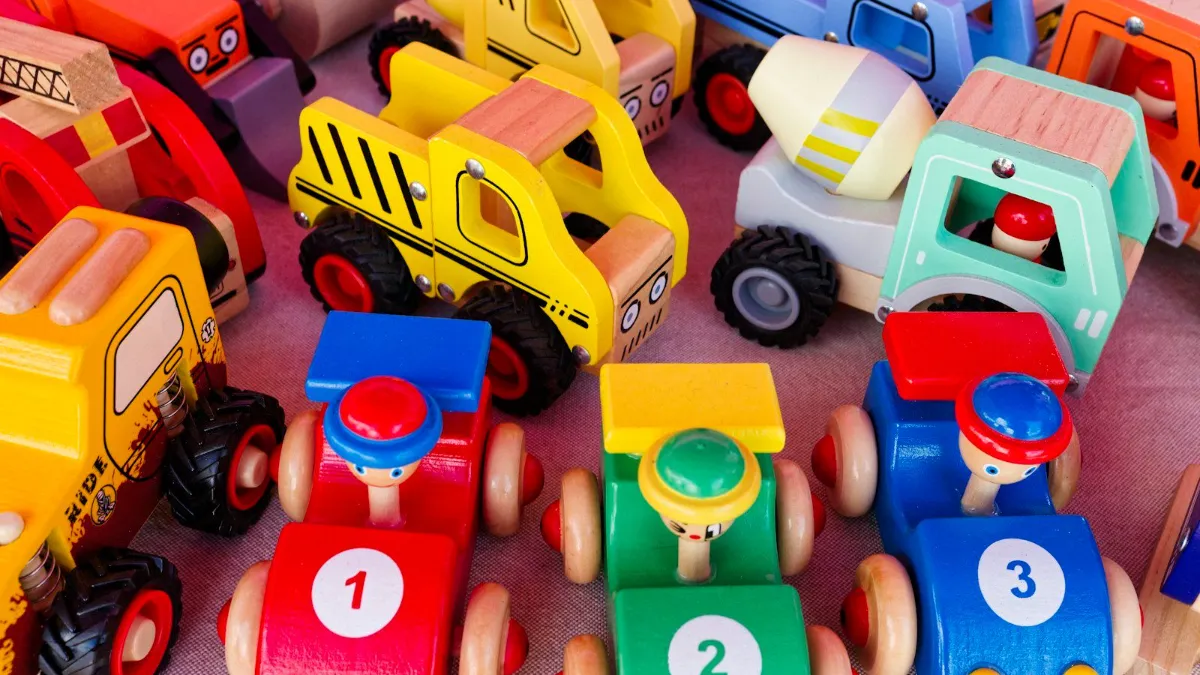
There is a particular frustration that settles in when you are trying to buy a thoughtful gift for a child. The toy aisles are full of things that beep, flash, or require a companion app to function, and the alternatives often feel either too generic (another art kit) or too precious for daily use. Meanwhile, the phrase “screen-free” has become so popular it now appears on packaging for items that, one way or another, still route a child toward a device. So before choosing a gift, it helps to get clear on what “screen-free” and “meaningful” actually mean — because the two words do not automatically come together, and understanding how they intersect is where thoughtful gift-giving really begins.
What “Screen-Free” and “Meaningful” Actually Mean
Screen-free is the easier concept to define: a gift that does not require, encourage, or route toward a screen to be used. No app downloads, no companion tablet, no digital leaderboard. But “meaningful” is where most gift lists fall short, because meaningful is not simply the absence of a screen. A meaningful gift for a child is one that invites them to do something, make something, share something, or remember something — and that continues to offer that invitation over time.
The distinction matters because the default alternative to a digital gift is often a passive physical one: a toy that entertains but does not engage, a kit that gets used once and forgotten, or a book that sits unread on a shelf. Research shows that children who have fewer toys actually play with them more — and not only do they play more, they play in more creative ways. This suggests that the quality, not the quantity, of a gift is what determines its real value. A meaningful screen-free gift isn’t just the absence of a screen; it’s the presence of something worth returning to.
Experiential and participatory gifts tend to elicit greater gratitude than purely material ones because they are construed as meaningful consumption memories — and that construal leads to greater gratitude and social connection. For children ages 5–12, this is a useful frame: gifts that produce something — a drawing, a story, a collection of a friend’s handwriting — outlast gifts that are simply consumed or played with once.
Why This Matters More Now Than Ever
There is a growing awareness among parents and caregivers that children face unprecedented levels of stimulation in their daily lives. Screens, notifications, algorithmic content feeds, and fast-paced digital media create a constant state of sensory input that many children struggle to self-regulate around. The response from families has been measurable and consistent.
The Toy Association has identified “Cozy Culture” as one of the defining play trends of 2026, reflecting a growing fondness for low-tech and no-tech play experiences that help families counterbalance constant digital stimulation and overstimulation.
This is not a moral panic, and it doesn’t require parents to become absolutists about screens. Higher or poorly structured screen exposure has generally been associated with attention difficulties and weaker executive function, though interactive and purposeful digital activities are sometimes associated with neutral or beneficial outcomes. The point is not that all screens are harmful — it’s that children benefit from a rich diet of analog, social, and creative experiences that screens simply cannot provide. That is exactly where a truly meaningful gift earns its place.
A Framework for Choosing Screen-Free Gifts That Last
Instead of thinking by product category (art supplies, board games, outdoor gear), it helps to think by the type of value a gift delivers. Four types of value tend to predict whether a screen-free gift becomes a lasting part of a child’s life or a brief novelty.
Lasting Memory: Gifts That Preserve Something
These are gifts that capture a moment, a feeling, or a relationship in physical form. Illustrated journals, handmade keepsake books, and memory-making stationery fall into this category. They are meaningful because they are unrepeatable — the words and drawings inside cannot be re-created, reprinted, or scrolled past. A heirloom-quality journal or a beautifully designed friendship book belongs here, and it tends to be most meaningful at ages 8 and up, when children have developed the autobiographical memory to understand why preserving something matters.
Creative Agency: Gifts That Let Children Make Something Real
Art supplies, craft kits, watercolor sets, clay, embroidery hoops, and bookmaking materials all give children the experience of genuine authorship. The finished product — however imperfect — is entirely theirs.
Gifts that build toward a real, holdable result tend to engage children longer and more deeply than single-activity kits with a defined endpoint.
Nature and Body: Gifts That Draw Children Outward
Binoculars, field journals, seed kits, magnifying glasses, hammocks, and nature art supplies all invite children to pay attention to the physical world. There is a renewed emphasis on outdoor and physical play, with parents valuing toys that encourage movement, teamwork, and social interaction — and sports equipment, outdoor games, and nature-based tools are seeing increased market share as families seek screen-free activities. For children ages 5–12, these gifts pair especially well with the developmental drive to classify, collect, and understand the natural world.
Connection and Friendship: Gifts That Invite Someone Else In
This is the most underrepresented category in most gift guides, and arguably the most powerful. Gifts that are designed to be shared — with friends, siblings, or family — deliver something no solo-use toy can: a social experience embedded in a physical object. A friendship-centered gift grows richer every time another person contributes to it. “Consuming experiences seems to be more emotionally rich than consuming material gifts,” one researcher observed. “And that sort of intensity of emotion translates into feeling more connected and a stronger relationship.” A gift that facilitates connection, rather than simply entertaining, delivers exactly this.
Age-Band Guidance: Matching Gift Type to Developmental Stage
Screen-free gifting is most effective when it’s age-appropriate — not in the sense of toy-box safety ratings, but in the sense of matching a gift to where a child actually is developmentally. For one age in detail, see our guide to unique gifts for 6-year-olds.
Ages 5–7: Hands-On, Open-Ended, and Tactile
Children in this age band are primarily learning through doing. They want to touch, sort, build, pour, and repeat. The best screen-free gifts here are those with physical richness and no fixed outcome: wooden art supplies, basic watercolor sets, nature exploration kits with containers and magnifiers, quality picture books with illustrated detail worth revisiting, and simple craft materials. Friendship-centered gifts work best when the prompts are simple and drawing-friendly rather than writing-heavy — think illustrated pages where a friend can draw their favorite animal or color in a shape.
Ages 8–10: Making, Collecting, and Beginning to Preserve
This is the age of projects — children who can plan, sustain attention across a longer activity, and experience real satisfaction from finishing something. Kits that produce a genuine artifact (a hand-bound journal, a completed watercolor, an embroidered hoop) are ideal here. So are friendship books and keepsake journals: the appreciation of experiences and memory-making grows with age, and this preference is related to the development of memory and perspective-taking skills. A child at this stage begins to understand that some things — a friend’s handwriting, a drawing made at age nine — are worth holding onto.
Ages 10–12: Identity, Depth, and Social Meaning
Older children in this band are developing a stronger sense of self and are increasingly attuned to what feels personal versus generic. The most resonant screen-free gifts are those that feel curated rather than mass-produced: a quality sketchbook with archival paper, a nature journal with real botanical illustrations, an analog camera that produces physical prints, or a heirloom-quality friendship book that can be taken to school and filled over a whole year. Research finds that people derive more enduring satisfaction from experiences than from material possessions, and that experiential gifts offer a compelling framework for investing in social connection, memories, and well-being. For a child on the cusp of middle school, a gift that marks their friendships and preserves them in physical form is exactly this kind of investment.
The Friend Book: Where Every Category Comes Together
Most screen-free gifts occupy one category of value well. A nature kit builds curiosity and outdoor connection. An art set supports creative agency. A quality book builds imagination and literacy. Each is worthwhile. But there is a specific type of gift — one with deep historical roots and a very modern relevance — that manages to occupy every category at once: the illustrated Friend Book.
The tradition of the friendship album, or “Book of Friends,” dates back centuries to a European practice where students and scholars collected the signatures, mottoes, and small drawings of their companions in an illustrated book. The practice was a way of preserving social ties across distance, across time, and across the transience of childhood itself. What made the album precious was not the book — it was what people put in it: the handwriting, the small drawings, the inside jokes, the declarations of “best friend forever” made by a nine-year-old who meant it completely.
That centuries-old tradition is the inspiration behind the beautifully illustrated Friend Book at the heart of this brand — a keepsake designed for children ages 5–12 to carry to school, to birthday parties, to sleepovers, and to any moment when a friend is nearby and willing to leave a trace of themselves on the page. Friends fill in their favorite things, draw pictures, write messages, and leave behind something that cannot be recreated. The result is not a completed product but a living record — one that grows more valuable with every person who contributes and every year that passes.
What makes it qualify as a meaningful screen-free gift in every sense of both words: it requires no screen to use, invites genuine handcraft and creativity, is fundamentally social in nature, and produces an artifact that becomes more meaningful over time — not less. A child who receives one in third grade and carries it through fifth grade has, at the end, something genuinely irreplaceable: proof that these people existed in their life, that they cared enough to write something down, and that childhood was worth preserving.
How to Choose Well
The most common mistake in screen-free gifting is choosing based on what looks impressive at the moment of giving rather than what will still be in use six months later. What parents are searching for is something specific: a physical thing that holds a child’s attention, builds something real, and can be done again and again rather than once and forgotten.
Apply three tests before finalizing any gift: Is it open-ended, meaning the child can engage with it differently each time? Does it invite someone else in — a friend, a sibling, a grandparent? And does it produce something the child will want to keep? A gift that passes all three tests is almost always the right one.
For gift-givers who want one beautifully crafted, screen-free choice that checks every box — meaningful, lasting, creative, and social — a beautifully illustrated Friend Book is the place to start. It is not a toy that will be outgrown, a kit that will be completed, or a game that will collect dust. It is a growing keepsake that children and their friends fill together over time, creating something that no screen can replicate and no algorithm can produce: a genuine record of childhood friendship, made by hand.
Where Things Stand
The shift toward screen-free, meaningful gifts has moved beyond a passing trend in 2026. Research on screen exposure in school-aged children continues to link heavy or poorly structured screen time with attention difficulties, and tweens already average more than four and a half hours of screen media a day, according to Common Sense Media. That keeps analog, creative and social gifts firmly in demand.
Frequently asked questions
What makes a gift truly 'meaningful' for a child, not just screen-free?
A truly meaningful gift does more than avoid a screen — it invites the child to make something, share something, or remember something. Gifts that are participatory (a journal filled with a friend's handwriting, an art kit that produces original work, a craft that becomes a keepsake) tend to generate stronger emotional responses and longer-lasting gratitude than passive entertainment items, screen-based or not. The 'meaningful' test is simple: will this gift still matter in ten years? If the answer is yes, you're on the right track.
At what age do children start to appreciate experiences and keepsakes over purely material toys?
Research suggests the shift begins gradually around ages 8–10, as children develop stronger autobiographical memory and perspective-taking skills. Younger children (5–7) still respond most strongly to tangible, hands-on objects — which is why the best screen-free gifts for this age group are physical and creative rather than purely experiential. By ages 10–12, children increasingly value things that feel personal, identity-building, and social — making friendship-centered keepsakes and creative tools especially resonant.
How do I choose a screen-free gift that won't just sit on a shelf after the first week?
Look for three qualities: open-endedness (can the child use it differently each time?), social potential (does it invite someone else in?), and depth (does it reward continued engagement?). A friendship book that grows richer as more friends contribute, a quality art set with materials that can be used across many projects, or a nature journaling kit that evolves with seasons — all check these boxes. Avoid single-use kits or items that have a defined 'finish.' The best screen-free gifts have no end state.
Are Friend Books suitable for children who aren't big readers or writers?
Yes — a well-designed Friend Book isn't primarily a reading or writing activity. It's a drawing, doodling, filling-in, and decorating activity that uses short prompts (favorite color, best day ever, draw your pet) to lower the barrier for children at any literacy stage. The handwritten and hand-drawn nature of the pages is actually part of what makes them precious: imperfect, personal, and entirely the child's own. Children as young as 5 can participate meaningfully with minimal adult guidance.
Related
About the author

VP Content
Dori Fussmann leads Album Amicorum, an independent studio behind an illustrated Friend Book that children fill in by hand — turning the notes, drawings, and small messages of childhood friendships into a keepsake worth keeping. His background is in building consumer brands, and he started writing here out of a conviction that the memories that matter most belong off-screen. These articles draw on child-development research and the work of experts such as Jonathan Haidt.